
Web Analytics

Ultraviolet Visible Spectroscopy

Schedule a Meeting

Ultraviolet VisibleSpectroscopy (UV-Vis)

The Ultraviolet-Visible Spectroscopy has proved to be a revolutionary tool in the scope of science and technology and is capable of outperforming other techniques in terms of cost. The contact of ultraviolet light and a given material refers to Spectroscopy. This technology has been in use and has been a successful tool in physics and chemistry. Thus, the spectrum formed in this process is the resultant here.
Agglomeration in API

Working of UV-Vis Spectroscopy

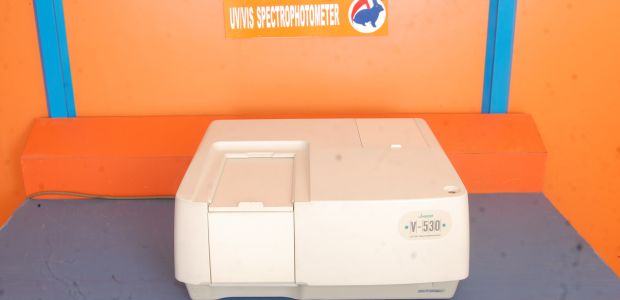
Technically, Ultraviolet-Visible Spectroscopy works on some complexities and scientific laws. It has its roots in the Beer-Lambert law that talks about the proportionality of absorbed energy and molar absorption of the given product. The higher level of concentration in a sample would absorb more light than a less concentrated sample. This study is professionally conducted so that an accurate result could be achieved. The absorbance of light is measured by a microplate reader (spectrophotometer). The Photomultiplier tube is one of the most commonly used detectors that help deliver a hassle-free and speedy result. A Deuterium-Tungsten lamp is used in UV-Vis Spectroscopy as it provides light that goes through the product and the detector. This resulted wavelength is then studied, and thus, the final result is achieved.

Spectroscopy has numerous branches that are useful in the modern sciences and are utilized in our day-to-day lives. Ultraviolet-Visible Spectroscopy (UV-Vis Spectroscopy) is one useful scope Spectroscopy that has a large number of applications in the present world. The concentration/purity of a material can be accessed with this technology concerning its quantity.

Industries Served

  • Aerospace
  • Automotive
  • Biomedical/biotechnology
  • Compound Semiconductor
  • Data Storage
  • Defense
  • Displays
  • Electronics
  • Industrial Products
  • Lighting
  • Pharmaceutical
  • Photonics
  • Polymer
  • Semiconductor
  • Solar Photovoltaics
  • Telecommunications

How UV-Vis Spectroscopy can be beneficial?

One of the tremendous applications of the UV-Vis Spectroscopy is surveying the Sun Protection Factor (SPF) in a product. Therefore, analyzing a large number of day-to-day items such as skin care products, dyes, coatings, ions (metallic), etc., becomes extremely unchallenging. The level of protein, DNA, and RNA can wonderfully be examined with UV-Vis Spectroscopy. The analyzed products can be rated and evaluated based on the results gained with the help of this test. Ultraviolet-Visible Spectroscopy is a great means of testing the quality level of a given product. Its application on the products of different states (solids, gaseous) has proved out to be extremely beneficial during the present times. The USP of UV-Vis Spectroscopy is that it is highly cost-effective and is known for its accuracy. The UV range is extended from 100 nm to 400 nm, which depicts the great potential of this technology. This modern tool eases out the complex operations and by-passes the cost factor of testing these samples that are generally high.

Why ChooseNishka Research

Join hands with Nishka Research and access the quality and accurate results of the Ultraviolet-Visible Spectroscopy test. The company is known for its wide presence pan-India. The company offers its prestigious services in the field of science and technology. Nishka Research is greatly known for its services in performing diverse Spectroscopic tests.

Looking for a trusted partner to achieve your research goals? schedule a meeting with us, send us a request, or call us at +91 78427 98518 to learn more about our services and how we can support you.

Need help or have a question?
+91 78427 98518

Nishka Research Brochure

We deliver next-gen research services, Testing & Consultation know more..

Ch. Rohan

Ch. Rohan

Typically replies within an hour

I will be back soon

Ch. Rohan
Hello 👋 Thanks for your interest in us. Before we begin, may I know your name?
Start Chat with:
chat Need Help?