
The Challenge
A reputed Middle East based pharmaceutical company engaged in the manufacturing of parenteral products for global markets was experiencing issues with microleaks that were not being detected during inspection.
The lack of suitable, certified microleak challenge kits made it difficult to verify the performance of the High Voltage Leak Detection (HVLD) system. These undetected defects raised concerns about container integrity and the ability of affected vials to meet the required specifications after production.
The Solution
Nishka Research has developed a customized CCIT challenge Kit using the same vials used for product which are submitted by the client. Moreover the product is highly viscous in nature so Nishka research has used the same product for HVLD challenge kit for 2 mL glass vials, considering the physicochemical properties of the product and the container geometry.
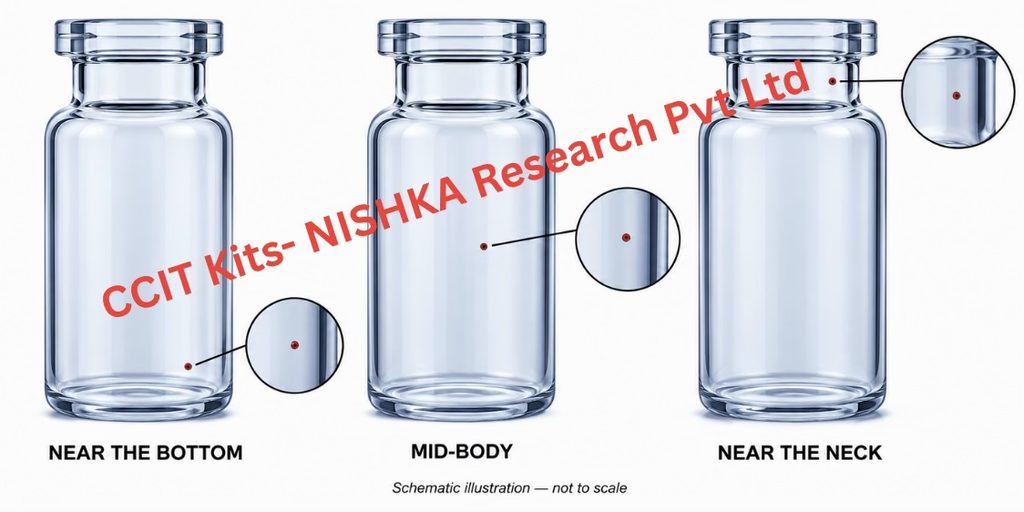
Microholes were developed at three locations on the glass vials:
- Near the bottom
- At the mid-body
- Near the neck
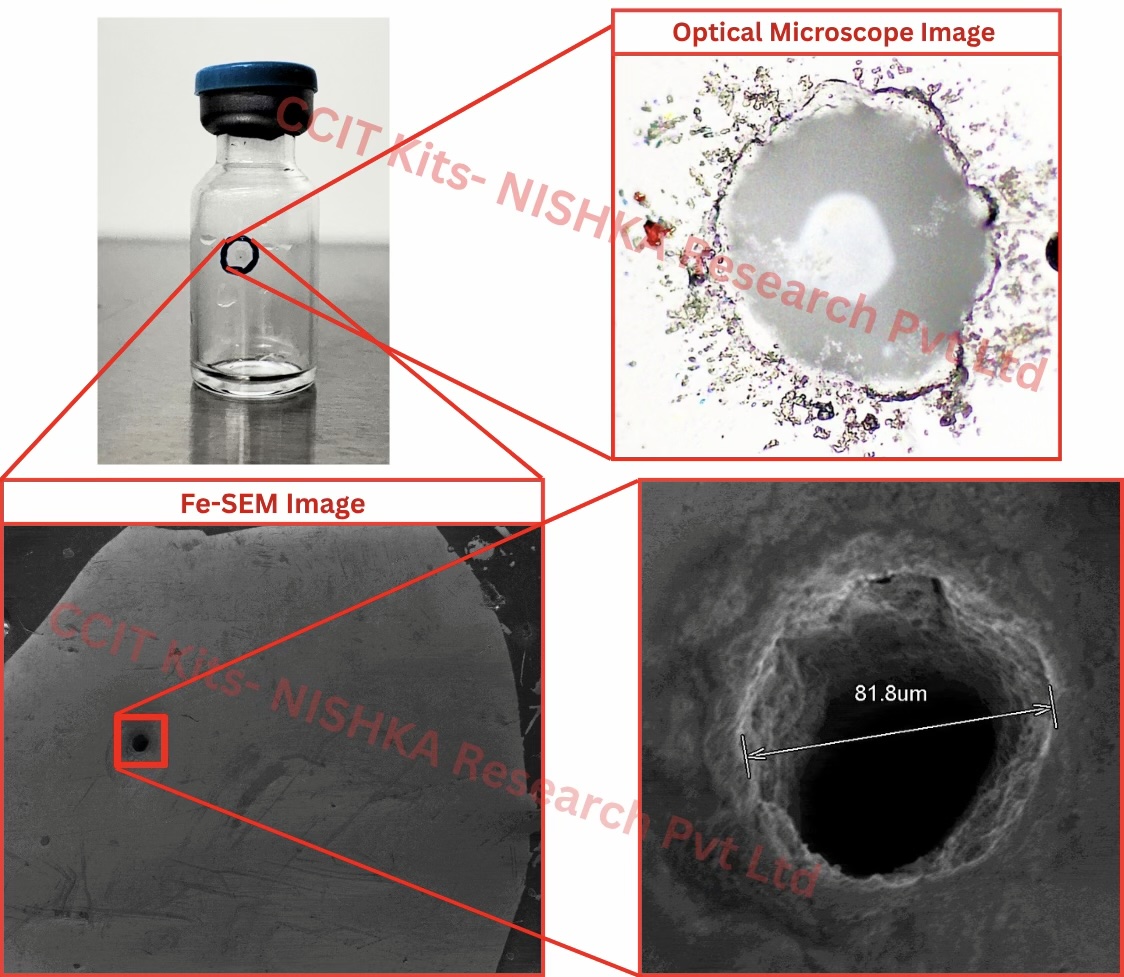
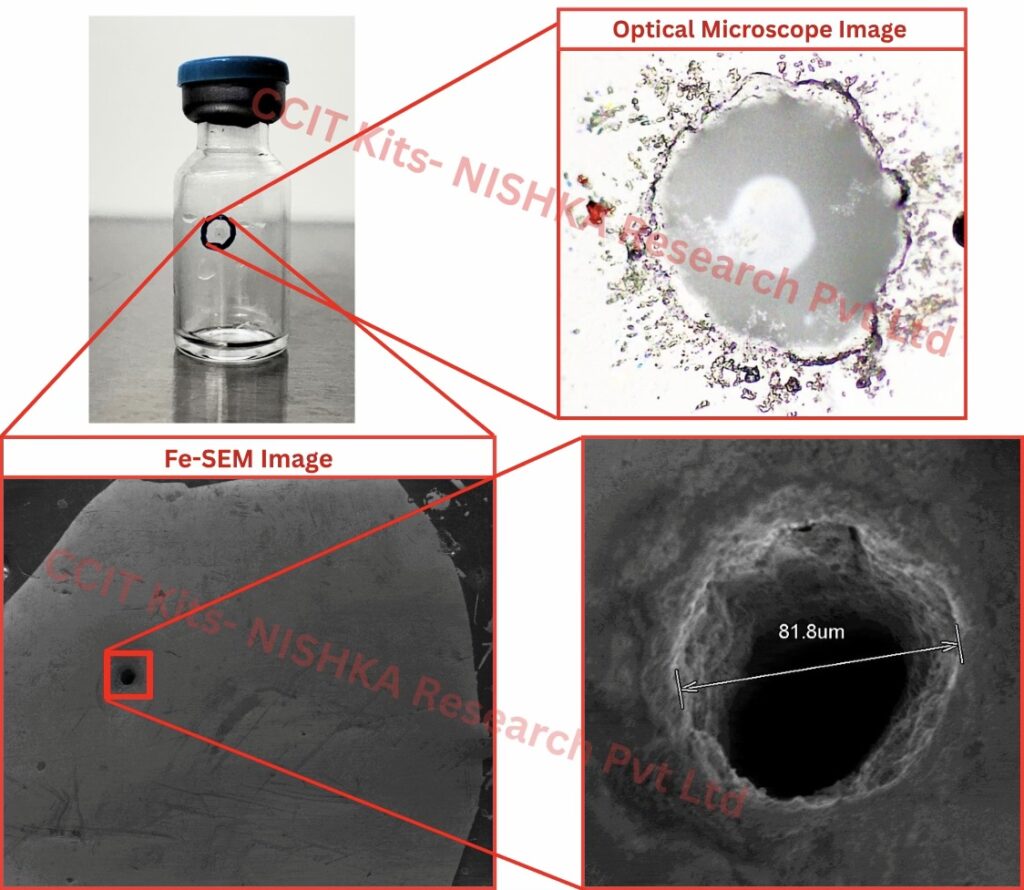
Microholes as small as approximately 78 µm were developed. Each microhole was examined using optical microscopy and field-emission scanning electron microscopy (FE-SEM) for dimensional characterization.
High-resolution microscopic images were captured for documentation. An individual certificate was issued for each microhole, incorporating supporting measurement details and high-definition images to provide defect-specific documentation for the client’s HVLD qualification and verification activities.
The Client’s Benefits
Nishka Research’s CCIT challenge kit supported the evaluation and verification of the client’s HVLD system using characterized microhole defects. Each microhole was supported by its own certificate, including measurement details and microscopic images.
The client could refer to the documented microhole dimensions when evaluating the challenge samples. Defects at the bottom, mid-body and neck enabled client for assessment of the system’s response to microleaks at different vial locations.
The client reported a significant reduction in vial rejections after implementing the Nishka Research’s CCIT challenge kits. The certified challenge samples provided documented evidence to support HVLD system assessment and routine verification activities. The kit supported the client’s container closure integrity testing (CCIT) activities in the context of USP General Chapter <1207>.
Outcome: Nishka Research delivered a customized HVLD challenge kit with individually characterized microholes and supporting certificates, helping the client strengthen defect detection assessment, sample traceability and HVLD verification practices.
Note: The kit supports CCIT qualification and verification activities; compliance with USP <1207> must be established through the client’s applicable procedures and product-specific validation.



0 Comments