
Discover the importance of pellet coating characterization for pharmaceutical formulations. Explore the techniques and parameters used to assess coating quality, thickness, adhesion, and more. Unlock the secrets to achieving optimal drug release and formulation performance.
Introduction
Welcome to our comprehensive guide on the characterization of pellet coating. In the pharmaceutical industry, pellet coatings play a crucial role in achieving controlled drug release, enhancing stability, and improving patient compliance. At Nishka Research Pvt Ltd, we understand the importance of thorough characterization in ensuring the quality and performance of pellet coatings. In this blog post, we will delve into the significance of pellet coating characterization, explore various techniques and parameters used in the evaluation process, and shed light on the benefits it offers to pharmaceutical manufacturers and researchers.
Understanding the Significance of Pellet Coating
The Role of Coatings in Pharmaceutical Formulations
Pellet coatings serve multiple purposes, including modifying drug release profiles, protecting drug substances from degradation, and improving patient compliance. We will discuss the importance of these functions and their impact on the overall performance of pharmaceutical formulations.
Enhancing Drug Stability
Coatings play a crucial role in protecting drugs from environmental factors that can degrade their efficacy. We will explore how pellet coatings safeguard drug substances and contribute to the stability and shelf-life of pharmaceutical products.
Improving Bioavailability
The design and formulation of pellet coatings can enhance the bioavailability of drugs by improving their solubility, dissolution, and absorption rates. We will examine the strategies used to optimize bioavailability and the role of coating characterization in achieving this goal.
Parameters for Pellet Coating Characterization
Coating Thickness Analysis
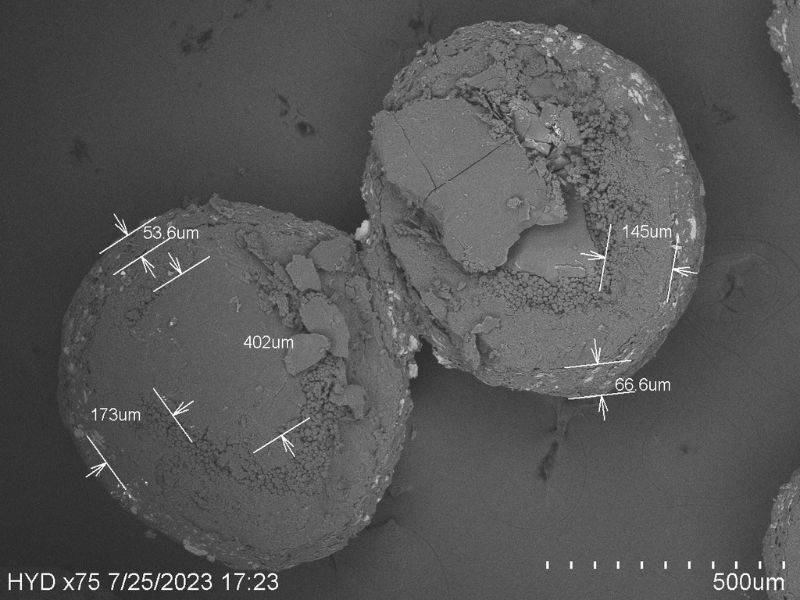
The thickness of pellet coatings directly affects drug release kinetics, formulation performance, and product consistency. We will discuss various techniques, such as optical microscopy and laser profilometry, used to measure coating thickness and their importance in formulation optimization.
Coating Uniformity Assessment
Uniform coating distribution is crucial for consistent drug release. We will explore the techniques used to evaluate coating uniformity, including image analysis and scanning electron microscopy (SEM). Understanding coating uniformity helps identify potential formulation issues and ensures reliable performance.
Adhesion Strength and Cohesion Analysis
The adhesion strength between the coating layers and the core pellet surface, as well as the cohesion within the coating layers, is critical for the durability and stability of the formulation. We will discuss methods like peel strength testing and atomic force microscopy (AFM) used to assess adhesion and cohesion.
Surface Morphology Evaluation
Characterizing the surface morphology of coated pellets provides insights into coating roughness, texture, and defects. Techniques such as SEM and atomic force microscopy (AFM) help visualize the coating surface and identify potential issues affecting drug release and formulation performance.
Drug Release Profiling
Evaluating the drug release profile from coated pellets is vital for understanding release kinetics and ensuring formulation effectiveness. We will discuss techniques like dissolution testing and mathematical modeling used to assess drug release behavior and optimize formulations.

Techniques for Pellet Coating Characterization
Cross-Sectional Analysis
Cross-sectional analysis involves preparing a sample of coated pellets for examination to gain insights into coating structure, thickness, and layer distribution. We will discuss the process of cross-sectioning and the techniques used, such as optical microscopy and SEM, to analyze coating layers.
Fourier Transform Infrared Spectroscopy (FTIR)
FTIR is a powerful tool for identifying coating materials, monitoring coating integrity, and assessing drug-excipient interactions. We will explore the application of FTIR in pellet coating characterization and its role in formulation development and quality control.
X-ray Diffraction (XRD) and Differential Scanning Calorimetry (DSC)
XRD and DSC provide valuable information about the crystalline and amorphous nature of coating materials, which can impact drug release and formulation stability. We will discuss how these techniques help analyze coating composition and understand its influence on product performance.
Mechanical Testing
Mechanical testing assesses coating properties such as tensile strength, adhesion, and abrasion resistance. These tests help determine the durability and functionality of pellet coatings. We will explore methods like tensile testing, peel strength testing, and scratch testing in detail.
Other Advanced Techniques
In addition to the above techniques, we will briefly introduce other advanced methods such as confocal laser scanning microscopy (CLSM), atomic force microscopy (AFM), and Raman spectroscopy, highlighting their potential applications in pellet coating characterization.
Benefits of Pellet Coating Characterization
Formulation Optimization
Thorough characterization of pellet coatings enables formulation optimization by fine-tuning parameters such as coating composition, thickness, and uniformity. We will discuss how this optimization process leads to improved drug release profiles and formulation performance.
Quality Control and Regulatory Compliance
Robust characterization ensures compliance with regulatory standards, enables batch-to-batch consistency, and ensures product quality. We will explore how pellet coating characterization supports quality control efforts and helps meet regulatory requirements.
Troubleshooting and Problem-Solving
In cases where coating-related issues arise, such as poor adhesion, inadequate drug release, or coating defects, thorough characterization can help identify the root causes and guide troubleshooting efforts. We will discuss how characterization aids in problem-solving and optimization of coating processes.
Cost Optimization
Efficient coating processes result in cost savings by reducing material waste and minimizing production downtime. We will highlight how pellet coating characterization contributes to cost optimization and process efficiency in pharmaceutical manufacturing.
Conclusion
In conclusion, the characterization of pellet coatings is essential for ensuring quality, performance, and regulatory compliance in the pharmaceutical industry. Nishka Research Pvt Ltd offers comprehensive pellet coating characterization services using advanced techniques and expertise. By leveraging techniques such as cross-sectional analysis, FTIR, XRD, mechanical testing, and more, we provide valuable insights into coating properties. Contact us today to unlock the secrets of pellet coating and elevate your pharmaceutical formulations to new heights.
Unlock the full potential of your pellet coatings with Nishka Research Pvt Ltd’s expert characterization services. Contact us now to discuss your specific requirements and discover how our comprehensive analysis can enhance the quality and performance of your pharmaceutical products.




0 Comments