
USP <788>, <789>, <790> and <1660>
Schedule a MeetingUSP <788>, <789>, <790> and <1660> – Comprehensive Testing forParticulate Matter & Glass Durability
Pharmaceutical manufacturers of parenteral (injectable) and ophthalmic products must rigorously control particulate matter and container quality to ensure patient safety and regulatory compliance. Global regulatory agencies (FDA, EMA, etc.) require that injections and ophthalmic solutions be essentially free of visible and sub-visible particles.
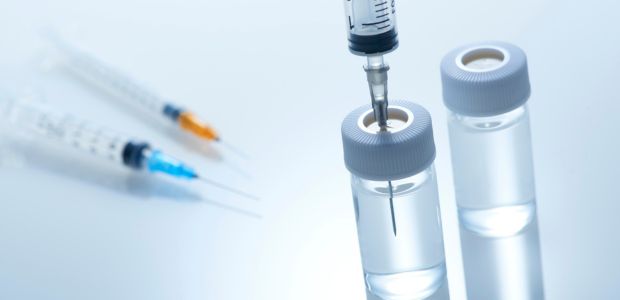
Standards like USP <788> (Particulate Matter in Injections), USP <789> (Particulate Matter in Ophthalmic Solutions), USP <790> (Visible Particulates in Injections), and USP <1660> (Glass Inner Surface Durability) define the testing methods and acceptance criteria to meet these requirements. Below, we provide an in-depth overview of each standard – what it entails, why it matters, and how our specialized testing services help you comply with U.S., European, and other international pharmacopeial requirements.
USP <788> Particulate Matter in Injections (Parenteral Drug Products)
Regulatory Requirements: Global pharmacopeias are harmonized on particulate limits for injections. USP <788> is aligned with EU and JP standards (Ph. Eur. 2.9.19 and JP 6.07), meaning compliance with USP <788> will typically satisfy FDA, EMA, and other regulatory agencies’ expectations. In fact, U.S. FDA regulations (USP <1>) explicitly state that parenteral preparations must exclude particulate matter per USP <788> and related chapters. Each batch of an injectable product must undergo particulate matter testing as part of lot release.
Test Methods: USP <788> specifies two compendial methods: Method 1 – Light Obscuration (LO) Particle Count and Method 2 – Microscopic Particle Count. Method 1 is preferred for the majority of solutions: an electronic particle counter (light obscuration) rapidly counts particles by size in a measured volume. If a sample is not suitable for LO (e.g. highly viscous, opaque, or tends to produce air bubbles), then Method 2 (membrane filtration followed by microscopic examination) is used. In practice, our laboratory performs Method 2 – Microscopic Particle Count for most injectable solutions using calibrated microscopes for particles in a clean environment (Class-100).
Sample Volume & Procedure: USP <788> requires a minimum sample volume of 25 mL for testing. Small-volume injections (containers ≤100 mL) may be pooled to obtain enough volume or tested as multiple units. Large-volume parenterals (>100 mL, e.g. infusion bags) are tested on a per-milliliter basis. Our team follows the USP protocol: we gently invert or swirl samples to homogenize, avoid bubble formation, then run the solution through the LO counter. For microscopic testing, we filter the sample through a specified membrane, then systematically scan the filter under a microscope to count particles.
Acceptance Criteria: The limits in USP <788> depend on container size and method, as summarized below:
- Small Volume Injections (≤100 mL): By LO (Method 1) – not more than 6,000 particles ≥10 µm and 600 particles ≥25 µm per container. By Microscopic (Method 2) – not more than3,000 particles ≥10 µm and 300 particles ≥25 µm per container. (The tighter limits for Method 2 reflect its tendency to count fewer particles, since filtration can miss some protein or oil droplets.)
- Large Volume Injections (>100 mL): By LO – not more than 25 particles ≥10 µm and 3 particles ≥25 µm per mL of sample. By Microscopic – not more than12 particles ≥10 µm and 2 particles ≥25 µm per mL. These limits scale with volume; for example, a 500 mL infusion bag would have an allowable total count of 25×500 = 12,500 particles ≥10 µm.
We provide full USP <788> particulate matter testing services for all injectable products. Our USP-qualified instruments and validated methods ensure precise particle size counting and sizing. Every test includes a detailed report of particulate counts, confirming compliance with USP <788> (and harmonized EP/JP criteria) for your batch release or stability testing needs. We also assist in investigations if a batch has high particulate levels – helping pinpoint whether particles are extrinsic contaminants, process-derived, or formulation-inherent (as classified by USP <787>). This comprehensive approach helps our clients achieve global regulatory compliance and, most importantly, protects patients from harm due to particulate contamination.
USP <789> Particulate Matter in Ophthalmic Solutions
Regulatory Context: FDA and global regulators expect ophthalmic solutions (particularly intravitreal injections, intraocular irrigating solutions, etc.) to comply with USP <789> limits. (Extraocular topical eye drops that are not injected might still be subject to particulate control, but in general any sterile ophthalmic intended for intraocular use must meet <789> criteria.) The test methods used are essentially the same as USP <788 – light obscuration and/or microscopic particle count – but the acceptance criteria differ, as noted below. Notably, USP <789> defines a single universal limit set, regardless of solution volume, meaning small-volume ocular injections do not get a “per container” allowance but are held to a strict per-milliliter standard.
Acceptance Criteria (USP <789>): All intraocular ophthalmic solutions must have no more than 50 particles per mL ≥10 µm, 5 per mL ≥25 µm, and 2 per mL ≥50 µm. These limits apply across the board – whether the product is a 0.1 mL intravitreal injection or a larger volume. Essentially, ophthalmic products must be far “cleaner” in terms of particulates than standard injectables. For example, a 1 mL ophthalmic injection could have at most 50 particles ≥10 µm, whereas an 1 mL injectable vial could permissibly have up to 6000 under USP <788> – underscoring how tight the ophthalmic limits are. Nishka Research ensures that we count particles down to these low concentrations with high sensitivity. If a sample initially fails by LO counting, USP <789> (like <788>) instructs to perform a microscopic count as a confirmatory test. However, given the stringent criteria, products failing <789> rarely pass on re-test unless an artifact caused the initial high count.
We support ophthalmic product manufacturers by performing USP <789> particulate testing with the same state-of-the-art equipment as for USP <788>, calibrated to detect even extremely low particle levels. Our analysts are aware of the enhanced stringency: we take extra care to avoid any extraneous contamination during sample prep (using laminar flow hoods, particle-free water for any dilutions, etc.). The result is a reliable measurement that you and your regulators can trust. We help you document that your ophthalmic injections or irrigations are “essentially free from particulates” in compliance with global standards – protecting patients’ vision and safety.
USP <790> Visible Particulates in Injections
Inspection Method: USP <790> provides a standardized procedure for manual visual inspection of injections. Inspection conditions are carefully defined to maximize defect detection: inspectors should examine each container for at least 5 seconds against a black background and 5 seconds against a white background, under high-intensity lighting of 2,000–3,750 lux. This alternating background technique ensures both light-colored and dark-colored particles can be seen. Our trained technicians follow this USP <790> method rigorously – working in inspection booths with controlled lighting and background panels. Each unit is gently swirled (to make particles drift and catch light) and inspected within the specified time frame. We also perform inspections both manually and, where applicable, using automated vision systems for 100% screening, followed by manual AQL (Acceptable Quality Level) sampling per USP guidelines to double-check the batch.
Acceptance Standard: Simply put, the goal is zero visible particles. USP <790> states that injectables should be essentially free of visible particulate matter. Practically, this is enforced by having no observed particles in a statistically significant AQL sample of units from the lot (after the 100% inspection). If even one unit in the inspection sample has a particle, the batch may require re-inspection or be considered for rejection depending on investigation findings. The European Pharmacopoeia has a similar chapter (Ph. Eur. 2.9.20) and other regions echo this requirement – all specify that patients should not access the injections with visible contaminants. Our service helps you meet these expectations by not only inspecting your product to USP <790>, but also by assisting in root cause analysis if any particles are found (common culprits are fiber from filters or garments, glass flakes from vials, rubber from stoppers, etc.). In fact, USP <1790> (informational chapter) provides guidance on preventing particulate contamination, including minimizing glass delamination and stopper shedding, while dealing these areas we can advise as a part of comprehensive quality strategy.
We offer complete USP <790> visible particulate inspection services for batches of injectables. This can range from accomplishing 100% manual inspection on small batches or acting as a quality oversight for your in-house automated inspection systems. Our inspectors are qualified for visual acuity and trained per USP <790> to ensure consistency and reliability. We document all findings meticulously. For clients who are establishing their own in-house inspection program, we also provide consulting on lighting setup, background selection, and inspector training to align with USP <790> and FDA’s expectations (FDA guidelines essentially mirror USP <790> for finished product inspection). Ensuring no visible particles in your product not only keeps you in compliance but, more importantly, protects patients from potentially dangerous contaminants.
USP <1660> Glass Container Inner Surface Durability (Resistance to Delamination)
Glass durability is influenced by factors like the type of glass (Type I borosilicate vs. others), manufacturing process (tubing vs. molded vials), surface treatments (siliconization, sulfur coating) and the physicochemical nature of the formulation (pH, buffers, etc.). For instance, pharmaceutical solutions with high pH or certain salts can aggressively extract alkali from glass, leading to surface weakening and flake formation. Because of these variables, regulators expect companies to assess container compatibility. FDA even calls out USP <1660> in its guidance for container closure changes, indicating that compendial products should meet <1660> evaluation when changing vial types.
Evaluation Approach: Unlike USP <788>/<789>/<790>, USP <1660> is seldom a single test with numeric limits, but preferably a guidance framework. It recommends a blend of tests and observations to predict the propensity for glass delamination in a given container/drug pairing. Key elements of a USP <1660> evaluation include:
- Visual Examination of the product and vial interior for any flakes or pitting after exposure to the drug formulation (often accelerated stability or elevated-temperature storage conditions are used to stress the system).
- Chemical Analysis of the solution for dissolved glass components, especially silica (SiO₂), which increases if the glass is corroding. This is done via ICP-MS or ICP-OES to detect trace elements leached from the glass, and pH/conductivity tests to detect changes indicative of glass attack.
- Microscopic Examination of the glass surface – e.g. using Fe-SEM (field emission scanning electron microscopy) with EDS (energy dispersive spectroscopy) to detect surface pitting or flakes and to analyze their composition. High-resolution imaging can reveal early stages of delamination (surface roughness, coating failures) before flakes are visible to the unaided eye.
- Simulation Tests with aggressive solutions if needed: USP <1660> suggests testing the glass with a highly aggressive solvent or buffered solution that accelerates delamination, to compare how different glass lots or types performd. This can help in selecting the right container or identifying a particularly vulnerable formulation.
Nishka Research offers a comprehensive USP <1660 testing program covering all these aspects. We use advanced instrumentation – for example, SEM-EDS to inspect the glass surface, and ICP-MS to quantify leached glass components – following the recommendations of USP <1660>. By quantitatively measuring the silica release and examining for any lamellae formation, we provide an evidence-based assessment of your container’s inner surface durability.
Outcome and Service Benefits: The goal of a USP <1660 evaluation is to ensure that your glass vials (or syringes, cartridges, etc.) will not shed particles over the product’s shelf-life. If our testing shows no significant glass delamination risk (no flakes seen, low glass element leachates), you can be confident in the container choice for your injectable. If issues are detected, we help interpret the results – e.g. maybe a certain vial from Manufacturer A showed glass pitting in our stress test whereas an alternative vial from Manufacturer B remained intact. Such findings allow you to make informed decisions on packaging or to adjust formulation parameters. This proactive testing is often expected by regulatory bodies; for instance, FDA guidance recommends performing a glass durability assessment (per USP <1660) when qualifying new containers. By partnering with us for USP <1660 services, injectable manufacturers can avoid costly surprises (like recalls due to glass flakes) and packaging suppliers can demonstrate the robustness of their glass containers to clients. Ultimately, this helps protect patients and maintain regulatory compliance by ensuring container-induced contamination is not a concern.
Global Regulatory Compliance and Comparative Overview
Regulatory agencies worldwide converge on the expectation that injectable and ophthalmic products have no harmful particulates and that packaging does not compromise product quality. USP chapters <788>, <789>, <790>, and <1660> collectively address these needs from different angles. The table below summarizes and compares these chapters and their key focus areas:
USP <788> is harmonized with EP 2.9.19 and JP 6.07 (sub-visible particulate tests) and USP <790> aligns with EP 2.9.20 and JP 6.06 (visible particulate inspection). Thus, testing to these USP standards facilitates compliance not only with FDA and USP, but also European Medicines Agency (EMA) and Japanese regulatory requirements. By covering all four areas – sub-visible particles in injections and ophthalmics, visible particle inspection, and glass durability – manufacturers can confidently release products that meet pharmacopeial quality standards and global Good Manufacturing Practices.
Ensuring your parenteral or ophthalmic product passes particulate matter tests (USP <788>, <789>, <790>) and packaging durability assessments (USP <1660>) is essential for regulatory approval, patient safety, and product success. These technical quality requirements might seem daunting, but that’s where we come in. Our expert team is ready to partner with you – from rigorous particulate counting to advanced glass delamination studies – so that you can focus on formulation and production while we verify that your product is impeccably clean and safe.
Why ChooseNishka Research
Ready to secure compliance and protect patients? Contact us today to learn more about our USP <788>/<789>/<790>/<1660> testing services. Ensure your injectables and ophthalmic products are particle-free and packaging-stable – let’s safeguard your product’s quality together!
Looking for a trusted partner to achieve your research goals? schedule a meeting with us, send us a request, or call us at +91 78427 98518 to learn more about our services and how we can support you.
Need help or have a question?

Nishka Research Brochure
We deliver next-gen research services, Testing & Consultation know more..